Image credits
Where the photographs come from
This page exists for the same reason the references at the foot of every article do. A site that asks readers to check its claims should make its pictures checkable too — so each credit below links to the source file and to the license deed, and you can confirm both without taking our word for either.
We do not use paid stock libraries. Their licenses are per-use and their imagery of this subject is, almost without exception, either a laboratory scene staged by a model or a mushroom lit in neon — the visual grammar of the marketing this publication exists to correct. A correctly identified specimen photographed by a mycologist tells the reader something true. A stock photograph of a scientist holding a flask of colored liquid does not.
If you are the photographer of an image here and something in the credit is wrong, write to [email protected] and we will fix it, or remove the image, the same day.
Photographs in use
6 photographs currently published.
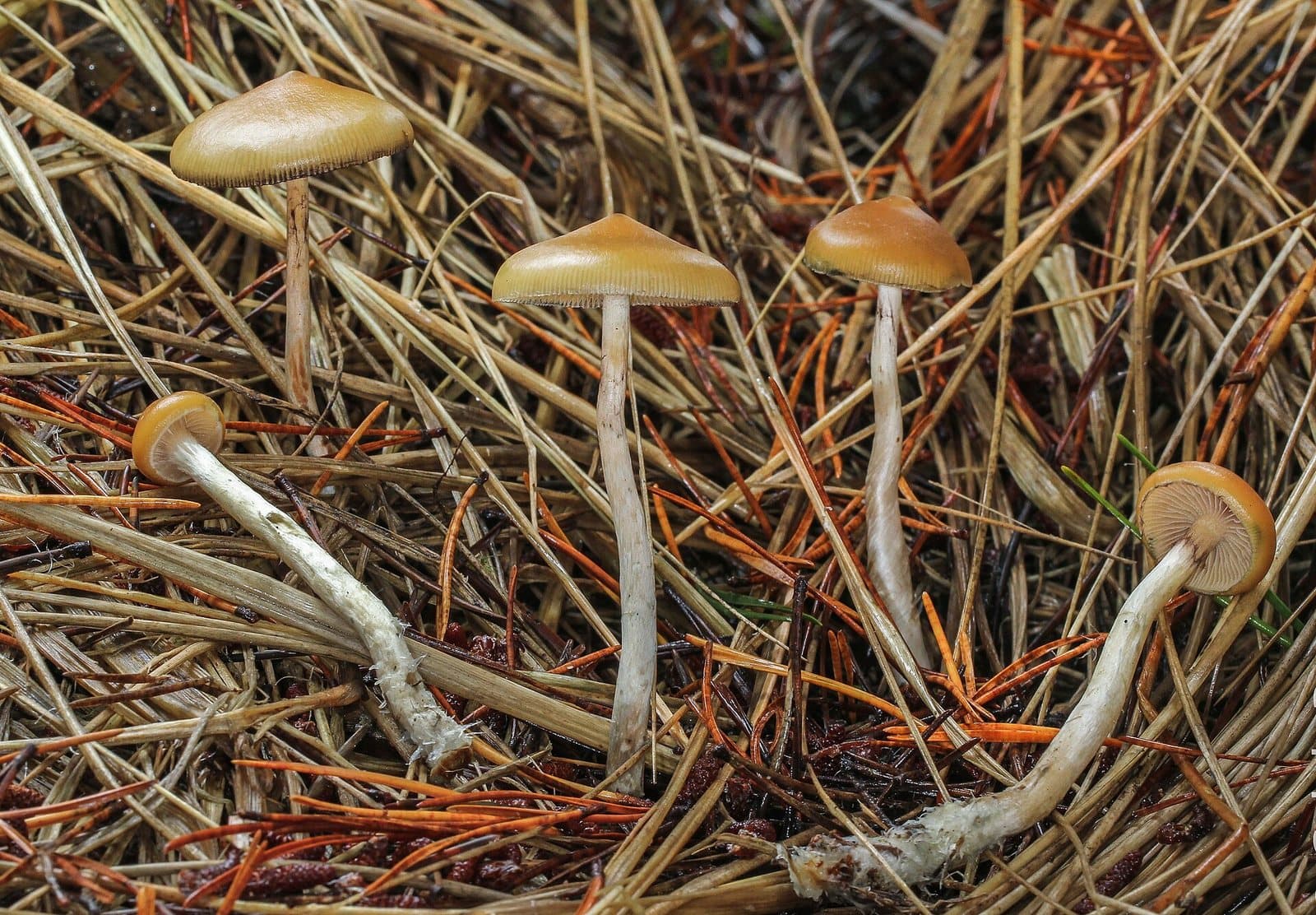
Psilocybe azurescens fruiting in coastal grass and conifer litter. It grows wild along the Oregon and Washington coast — which is a fact about the mushroom, not about Oregon's law: the state's regulated program uses cultivated Psilocybe cubensis, and picking these remains an offense.
- Photographer
- Caleb Brown
- License
- CC BY-SA 3.0
- Source
- Wikimedia Commons
- Taken
- 2018-11-03
Changes we made: Resized for the web. Not cropped or retouched.
Appears on /science
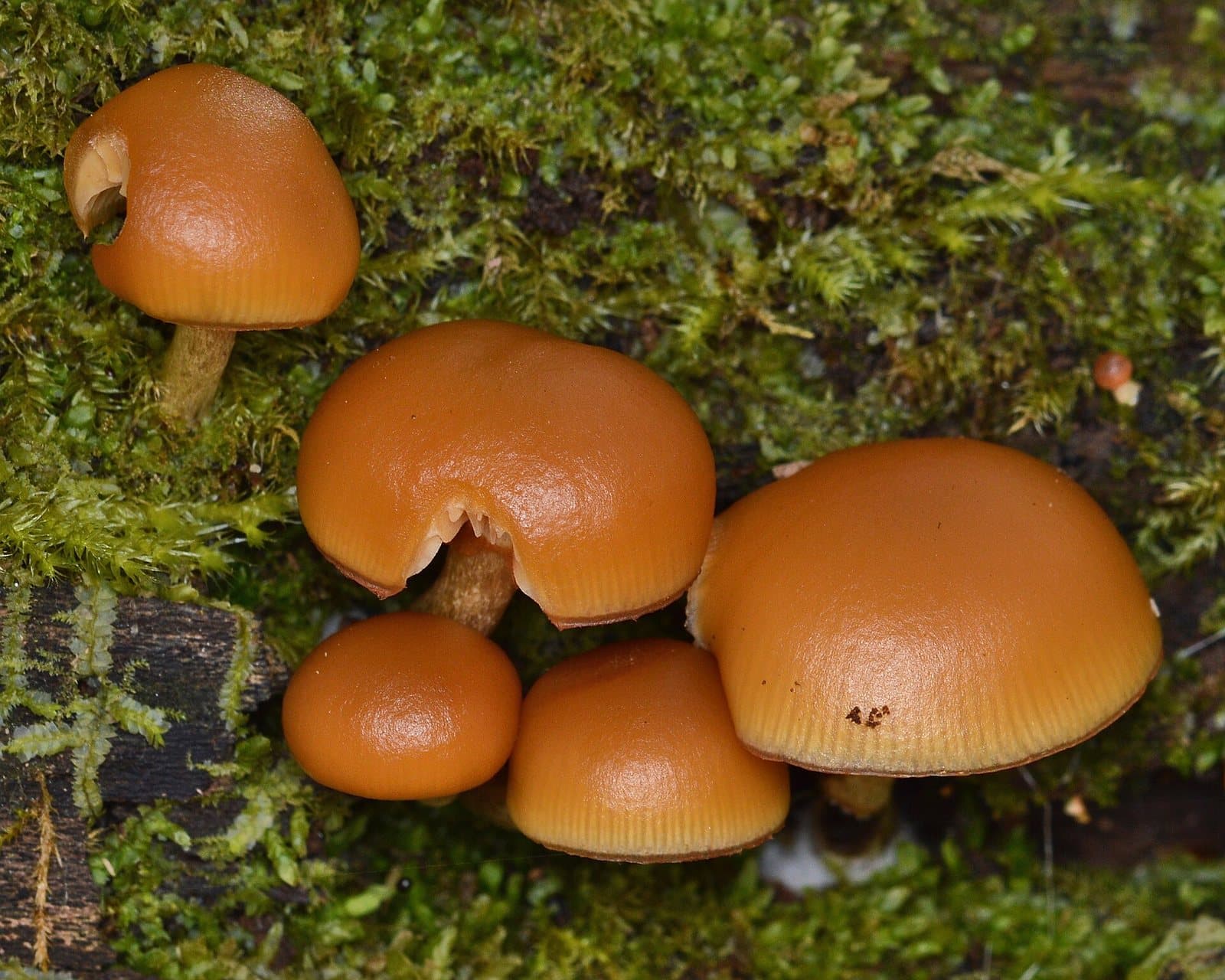
Galerina marginata, the funeral bell. It contains the same amatoxins as the death cap, it grows on wood in the same months and the same places as several Psilocybe species, and at a glance it looks like them. This is the single most important photograph on this page.
- Photographer
- Ryan Hodnett
- License
- CC BY-SA 4.0
- Source
- Wikimedia Commons
- Taken
- 2017-10-27
Changes we made: Resized for the web. Not cropped or retouched.
Appears on /psilocybin-safety-and-risks
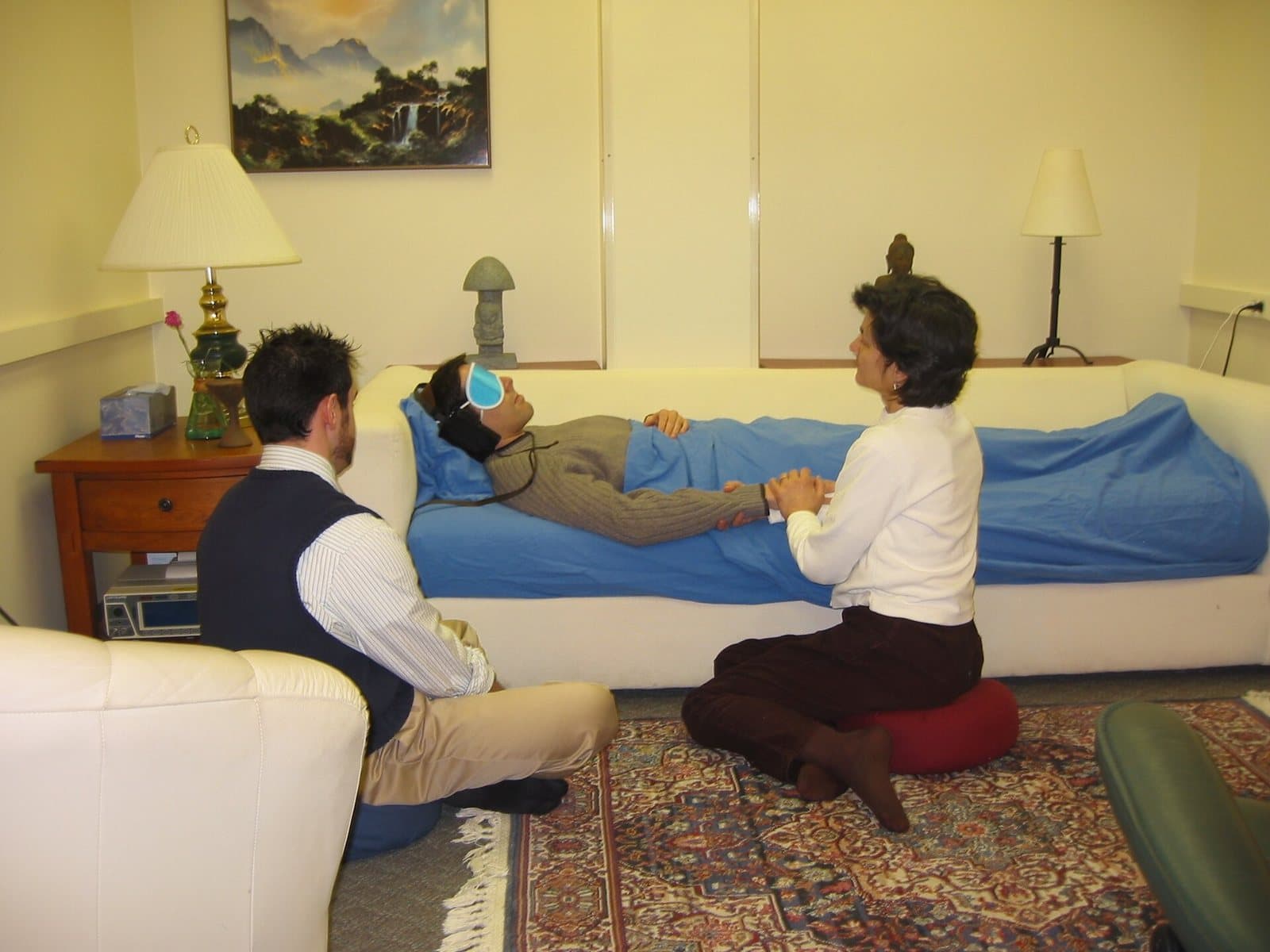
A psilocybin session room at Johns Hopkins, photographed in 2008. A participant in eyeshades, two monitors present for the whole session, a couch and a lamp. Nearly every widely reproduced trial result you will read about came out of rooms that look like this one.
- Photographer
- Matthew W. Johnson
- License
- CC BY-SA 3.0
- Source
- Wikimedia Commons
- Taken
- 2008
Changes we made: Resized for the web. Not cropped or retouched.
Appears on /psilocybin-clinical-trials, /psilocybin-therapy-cost
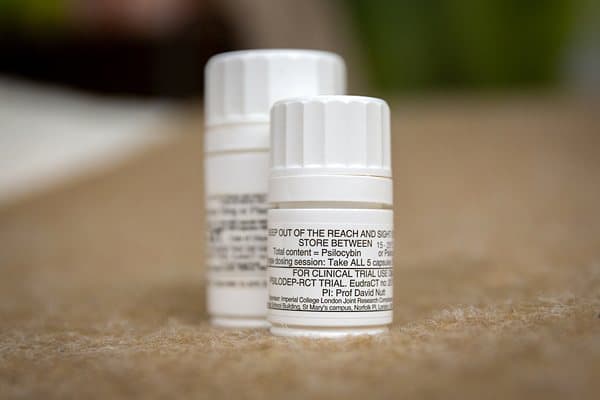
Trial medication from PSILODEP-RCT at Imperial College London: psilocybin as an investigational medicinal product, in a labeled bottle with a EudraCT number and a named principal investigator on it. This is what the drug looks like inside the research this site reports on.
- Photographer
- Thomas Angus, Imperial College London
- License
- CC BY-SA 4.0
- Source
- Wikimedia Commons
- Taken
- 2019-08-21
Changes we made: None. Published at the size the source provides.
Appears on /psilocybin-drug-development-pipeline, /psilocybin-depression-research
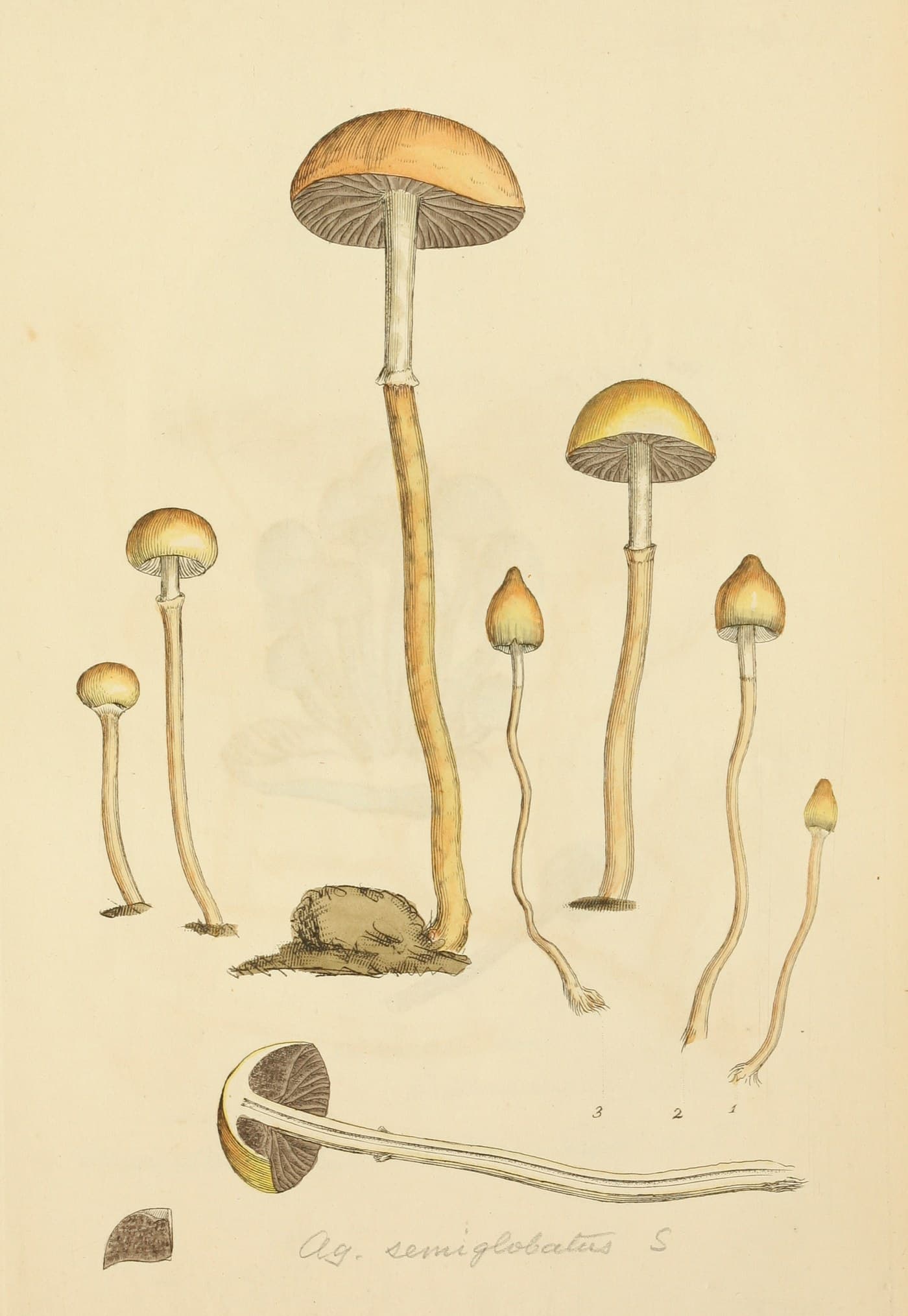
James Sowerby's hand-colored engraving, published in London on 1 January 1800. Figures 1, 2 and 3 at the lower right are the liberty cap — then Agaricus semilanceatus — drawn beside Stropharia semiglobata. The annotations in pencil are the naturalist's own.
- Photographer
- James Sowerby
- License
- Public domain
- Source
- Wikimedia Commons
- Taken
- 1800-01-01
Changes we made: Plate margins trimmed and resized for the web. Color untouched.
Appears on /how-psilocybin-works
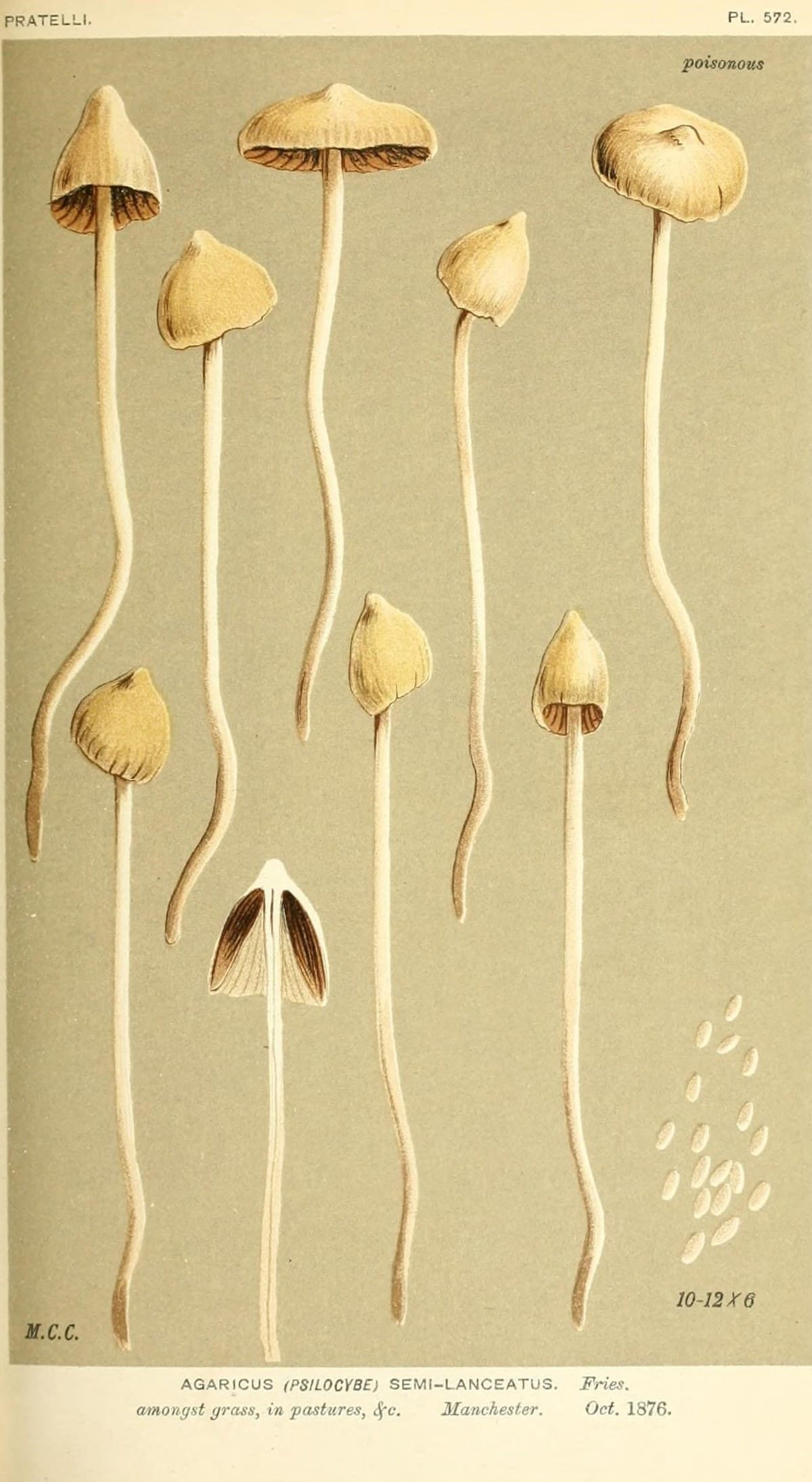
Mordecai Cubitt Cooke drew this plate from liberty caps collected in a Manchester pasture in October 1876, down to the spore print at lower right. Note the word at the top of the plate: poisonous. That was the settled scientific view of this mushroom eighty years before anyone isolated psilocybin from it.
- Photographer
- Mordecai Cubitt Cooke
- License
- Public domain
- Source
- Wikimedia Commons
- Taken
- 1876-10
Changes we made: Page edge cropped and resized for the web. Color untouched.
Appears on /what-people-get-wrong