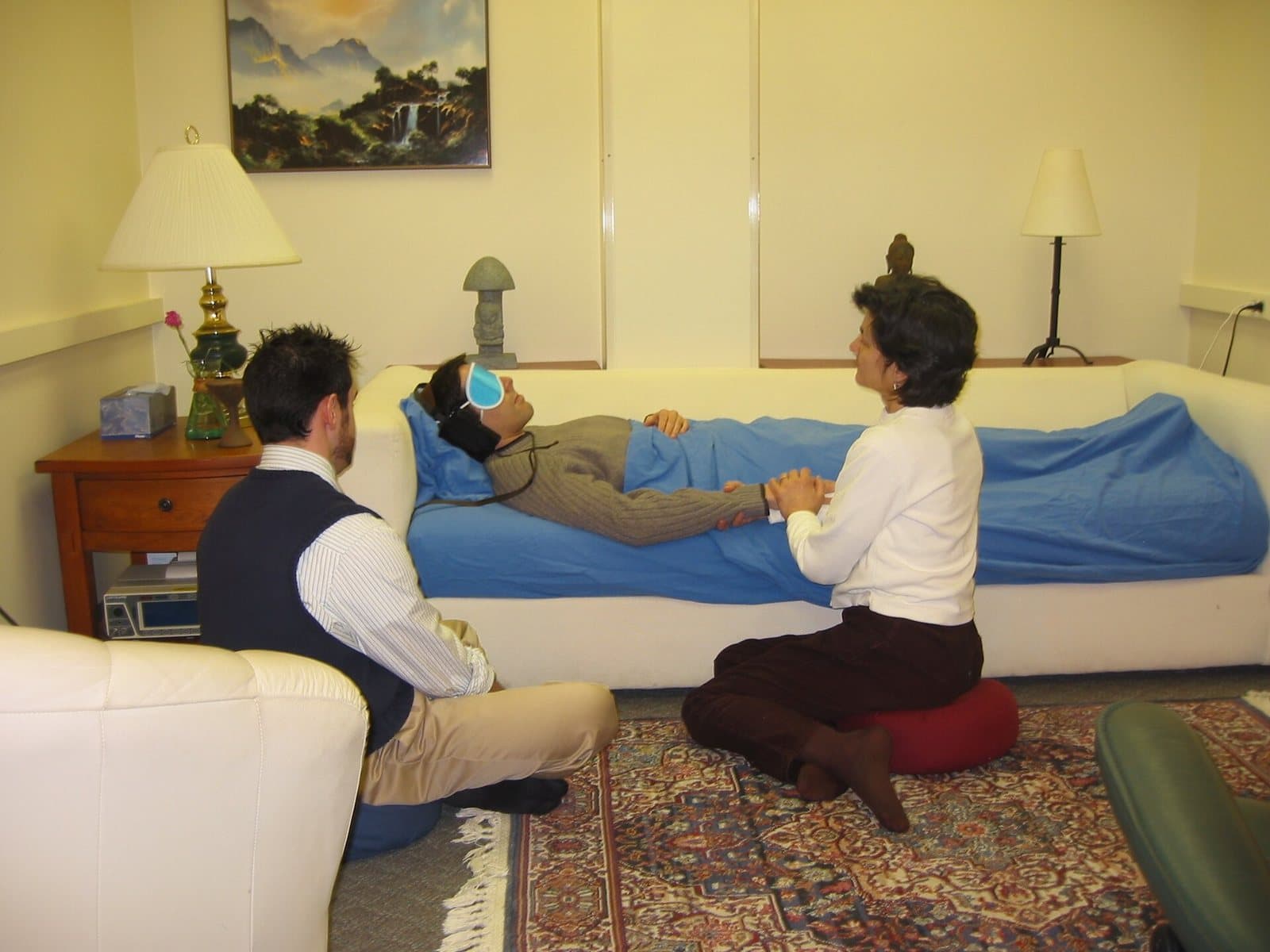
Every legal pathway with a real price range, the costs people forget to budget for, and the one option that is free.
Treatment & accessReviewed
The short answer
A supervised psilocybin session at a licensed center in Oregon or Colorado costs roughly $1,000 to $3,500, paid entirely out of pocket. No US insurer, Medicare or Medicaid program covers it, because psilocybin is not FDA-approved. Preparation and integration sessions, travel and time off work are usually extra. A clinical trial is free and often compensated, but requires meeting narrow eligibility criteria — and, in most trials, tapering off antidepressants first.
Every price here comes from a provider’s own published page rather than from us — see our advertising disclosure.
Typical session
$1,000–3,500
Covered by insurance
No
States where it's legal
2
Clinical trial
Free
Side by side
Every legal pathway, priced
Ranges are what providers actually charge, not a survey average. Where a range is wide, the market genuinely is.
Oregon licensed service centerOregon
$1,000 – $3,500
Colorado licensed healing centerColorado
$1,200 – $3,500
Clinical trialNationwide
Free
Legal international retreatJamaica, Netherlands, and elsewhere
$2,000 – $8,000
Ketamine therapy (for comparison)Nationwide
$400 – $800
Per session unless the pathway states otherwise. Ranges are what providers publish, not a survey average.
Cost of each legal psilocybin pathway in the United States, August 2026
Figures are the ranges providers advertise, gathered from public price pages — not a survey, and not a quote. We report them as the shape of a market rather than as a statistic, because no independent pricing dataset exists for any of these treatments. Reviewed 2026-08-30.
Work out your route
Which route is actually open to you
Three questions. Insurance, travel, and whether a trial is realistic settle it.
Question 1 of 3
Does insurance need to cover it?
No insurer in the US reimburses psilocybin, because the FDA has not approved it.
See all four routes
A clinical trial
$0
Free, often compensated, and lawful in every state. The barrier is eligibility rather than money — and in most trials, being off antidepressants first.
An Oregon or Colorado service center
$1,000–$3,500
Open to anyone over 21, with no diagnosis, prescription or residency requirement. Budget for travel and two days rather than the session fee alone.
Something other than psilocybin
Copay, in many plans
Esketamine and TMS are FDA-authorized and therefore billable. That authorization is the whole difference, and it is worth understanding before spending savings on a session no insurer will reimburse.
There is no legal route where you are
—
Local deprioritization is not legalization and will not protect you. We would rather say that plainly than sell you a workaround. Two things stay open: a trial, if you can reach one, and the waiting list for your own state.
No diagnosis or prescription is needed, and there is no residency requirement — people travel to Oregon for this.
You will also pay for
Preparation session, sometimes bundled, sometimes $100–$300
Integration sessions, typically $100–$250 each
Travel and a night's accommodation — sessions run six to eight hours
Time off work: budget a full day, plus the day after
Best suited to
Adults 21+ who want legal supervised access without needing to qualify medically.
Insurance
Not covered. Psilocybin is not FDA-approved, so no insurer or Medicaid program reimburses it, and HSA/FSA funds generally cannot be used.
Some centers offer group sessions from around $500 and low-income sliding scales; a few premium retreat-style programs exceed $5,000. Both tails are real.
Colorado licensed healing center
$1,200–$3,500per session, all-in
Colorado also permits adults 21+ to possess, grow and share psilocybin without payment — so the paid pathway is a choice, not the only lawful route.
You will also pay for
Preparation and integration, often sold as a package
Travel and accommodation
Best suited to
Adults 21+ in or near Colorado; the newer of the two markets, with fewer centers.
Insurance
Not covered, for the same reason as Oregon.
The program opened its first licensed center in April 2025. Pricing is still finding its level and moves faster than Oregon's.
Clinical trial
Freefree — often compensated
The only route to legal psilocybin in most of the country. Requires meeting narrow eligibility criteria.
You will also pay for
Travel to the study site, though many trials reimburse it
Considerable time: screening, multiple visits, long follow-up
Best suited to
People who meet the criteria and can commit the time — usually treatment-resistant depression, and usually requiring you to be off antidepressants.
Insurance
Not applicable. The sponsor pays for the study drug and study visits.
Most trials require tapering off antidepressants first, under supervision. That exclusion rules out a large share of the people most interested.
Legal international retreat
$2,000–$8,000per multi-day program
Legal in the host country. Bringing psilocybin back into the US is a federal offense, and screening standards vary enormously between operators.
You will also pay for
International flights
Travel insurance
Integration support after you return home
Best suited to
People outside legal-access states who want a supervised group setting.
Insurance
Not covered anywhere.
This is the least regulated pathway in the list. Medical screening, staffing ratios and emergency protocols differ by operator and are worth checking in writing before you pay.
Ketamine therapy (for comparison)
$400–$800per infusion; courses are usually 6
Legal and available now in all 50 states — which is why it belongs in an honest cost comparison.
You will also pay for
Consultation fees
Maintenance infusions, if you continue
Best suited to
People who want a legal, available, partially reimbursable option today rather than a future one.
Insurance
Sometimes partially covered. Spravato (esketamine) has FDA approval for treatment-resistant depression and is more often reimbursed than off-label IV ketamine.
Disclosure. Some listings on this page are referral partners and may pay us a fee. Partner status never affects whether a provider is listed, how it is described, or where it ranks — those follow our published criteria.
The real comparison
Why the alternatives cost you less
Most people weighing a psilocybin session are also weighing ketamine, Spravato or TMS. The difference in what you pay is almost entirely a difference in regulatory status.
Regulatory status and insurance coverage of psilocybin compared with esketamine, ketamine infusion and transcranial magnetic stimulation
Treatment
Regulatory status
Insurance
What you pay
Psilocybin (supervised session)Legal only in Oregon and Colorado, under state programs. Paid in full by the client, with no insurance, Medicaid or HSA route.
Not FDA-approved · Schedule I
Never
$1,000–$3,500 per session
Esketamine (Spravato)Administered in a certified clinic under a REMS program, with monitoring afterwards. Because it is approved, it is billable — which is the entire reason its out-of-pocket cost can be a fraction of psilocybin's.
FDA-approved for treatment-resistant depression
Commonly, with prior authorization
Copay varies; list price is per dosing session
Ketamine infusion (off-label)Off-label use is legal but usually not reimbursed, so most people pay cash. Prices are set clinic by clinic and vary more than any other treatment here.
Approved as an anesthetic; used off-label for depression
Rarely
Several hundred dollars per infusion, in a course
Transcranial magnetic stimulationThe usual insurer requirement is documented failure of two or more antidepressants. Time cost is high — daily sessions over about six weeks — but the financial cost is often modest once approved.
FDA-cleared for treatment-resistant depression
Commonly, after failed medication trials
A course of roughly 30–36 sessions
This is the part worth sitting with. Psilocybin is not expensive because it is better, or scarcer, or newer. It is expensive because it cannot be billed to anyone. The moment a psilocybin medicine is FDA-approved and rescheduled, that changes — which is why the approval timeline is a cost story as much as a science one. Where that stands now.
Why it costs this much
Part of the answer is supply. Oregon lists 21 service centers, and a session has to happen at one — against 378 licensed facilitators, which is a market with far more practitioners than rooms.
The price is labor, not medicine. A session runs six to eight hours with a trained facilitator present the entire time, wrapped in preparation appointments beforehand and integration sessions afterwards. That structure is not a marketing choice — it is what the published therapy protocols specify. Yale’s manual for psilocybin-assisted therapy of depression sets out the same shape: preparation, a monitor present through the whole dosing day, then integration.[6] The psilocybin itself is a rounding error on the bill.
Two monitors, one participant, most of a working day. This is a Johns Hopkins research session rather than a commercial one, but the staffing is the same everywhere — and it is what you are paying for.
That structure is also the central problem for anyone trying to pay for this at scale. A federal report in August 2026 told states to start planning for the fiscal consequences of FDA approval, and put the dilemma bluntly: a state could cover the drug or the therapy, but the evidence does not support prescribing psilocybin for unsupervised home use — so covering the drug alone is not a real option, and covering both is expensive.[4] Until that is resolved, the cost sits with you.
The free option almost nobody mentions
Clinical trials cost nothing and frequently pay participants. The sponsor covers the study drug, the sessions and usually travel. If you meet the criteria this is unambiguously the best-value route, and it is the only lawful one in most of the country.
The catch is real, though, and the sites promoting retreats rarely spell it out: most psilocybin trials have required participants to be off antidepressants before dosing. The 2023 JAMA trial required discontinuation for at least two weeks or five half-lives, whichever was longer.[2] That single criterion excludes a large share of the people most interested in enrolling.
Is it worth it?
We can tell you what the evidence supports, not whether to spend the money. The most relevant data point for someone weighing a licensed session is the first real-world outcomes study of Oregon’s program, published in JAMA Network Open in August 2026: among 346 clients across 24 service centers, 91.5% reported benefit at one month and 2% described the experience as harmful at three months.[1]
Read that carefully, because it is observational. There was no control group, so it cannot tell you how much of that benefit the psilocybin caused — and the authors note participants were healthier than typical trial populations, with only about half reporting moderate-to-severe depression at baseline. It describes what happens in practice. It is not an efficacy result, and anyone quoting the 91.5% at you without that sentence attached is selling something.
For comparison: the two Phase 3 trials of synthetic psilocybin both met their primary endpoint in 2025 and 2026, with differences of 3.6 and 3.8 MADRS points against control.[5] Those are real, statistically significant, and modest — in the same broad range as conventional antidepressants in acute trials. We apply the same yardstick to both.
Free, no cost attached
The questions to ask any provider before you pay them
Our workbook includes a provider-vetting checklist: what to ask about facilitator training, what a legitimate intake screens for, and what should be included in the fee.
The workbook arrives right away, then a monthly briefing. Unsubscribe in a click.
Common questions
Cost questions people ask
Does insurance cover psilocybin therapy?
No. As of August 2026 psilocybin is not FDA-approved and remains a Schedule I controlled substance, so no US insurer, Medicare or Medicaid program covers it. Oregon and Colorado sessions are paid entirely out of pocket. A federal report in August 2026 advised states to start planning for how Medicaid would cover these therapies if the FDA approves them — which tells you coverage does not exist today.
How much does psilocybin therapy cost in Oregon?
Most people pay between $1,000 and $3,500 for a supervised session at a licensed Oregon service center, including preparation and the session itself. Group sessions can start near $500 and premium programs can exceed $5,000. Integration sessions, travel and time off work are usually extra.
Is there a cheaper legal way to access psilocybin?
Yes — a clinical trial. Participation is free and often compensated, and the sponsor covers the study drug and visits. The trade-offs are narrow eligibility criteria, a substantial time commitment, and a requirement in most trials to taper off antidepressants first under medical supervision.
Why is psilocybin therapy so expensive?
The cost is mostly labor, not medicine. A session runs six to eight hours with a trained facilitator present throughout, plus preparation and integration appointments. The psilocybin itself is a small fraction of the price. This is also why covering the drug without the therapy would not work, and why states are being warned the combined cost is significant.
Can I use an HSA or FSA to pay for it?
Generally no. HSA and FSA funds are intended for qualified medical expenses, and a substance that is federally illegal and not FDA-approved does not qualify. Check with your plan administrator before assuming otherwise.